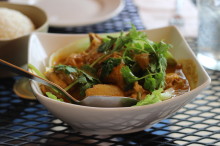
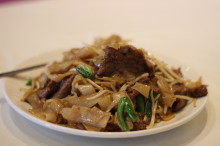
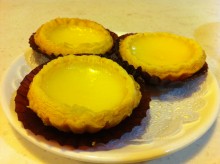
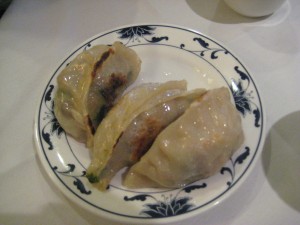
You know how some restaurants don’t seem to have an identity? You know, like Jack in the Box but in full restaurant form. Well, Sun Penang in Squirrel Hill is one of those restaurants. The only identity it really has is “Asian,” but Asian covers a lot of groups and so does Sun Penang. From Thai to Dim Sum to Malaysian, it is a hard place to choose a meal, but choose I did.
Chinatowns are an interesting phenomenon. And not so much in the fact that a group of people from a country showed up to a new country and settled in one area, but in the way that they no longer really seem to be representative of China. Case in point: while in Vancouver, I knew there was good Chinese to be found, and rather than point me to Chinatown, my hotel pointed me to Richmond, which he called real Chinatown. By real, he meant that the Chinatown on the map was simply no longer authentic, if it ever was. By recommendation, we went to a place called Rainflower to devour dim sum before undertaking the long drive to Jasper.
It seems like going to China without eating dim sum is on par with going to Italy and not eating pasta. But in truth, dim sum is really a specialty of Hong Kong and Guangdong (formerly known as Canton). Fortunately, in this day and age, you can find Cantonese restaurants all over China. In Xi’an, we found a place called Star Ferry near the Bell Tower. The interior of the restaurant was decorated like a boat, and I later found out that it was named for a ferry company operating in Hong Kong.
In the old Chinatown of downtown LA, there is a massive restaurant called the Empress Pavillion. The restaurant consists of a giant ballroom filled with chairs and tables.
In the mornings, the room becomes packed with hundreds of Chinese and westerners alike, all clamoring for a taste of the dim sum. Chinese women (whose command of the English language varies from non-existent to mediocre) push carts of plates around with varying dishes. If something on the cart looks good, you stop the lady, point to the food and she sets it on your table. Afterward, she takes out a stamp and presses it somewhere on the card on your table. You look to see where she stamped, but can’t really tell what anything means because it is all written in Chinese. Luckily, I can read some Chinese, and
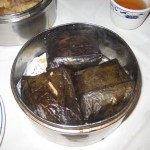
Sticky Rice in Lotus Leaf
determined that the stamps go in different sections, meaning small, medium and large. There are more complex symbols, but at least those make some sense to me. Through this mysterious stamping system, they are able to determine how much you owe.